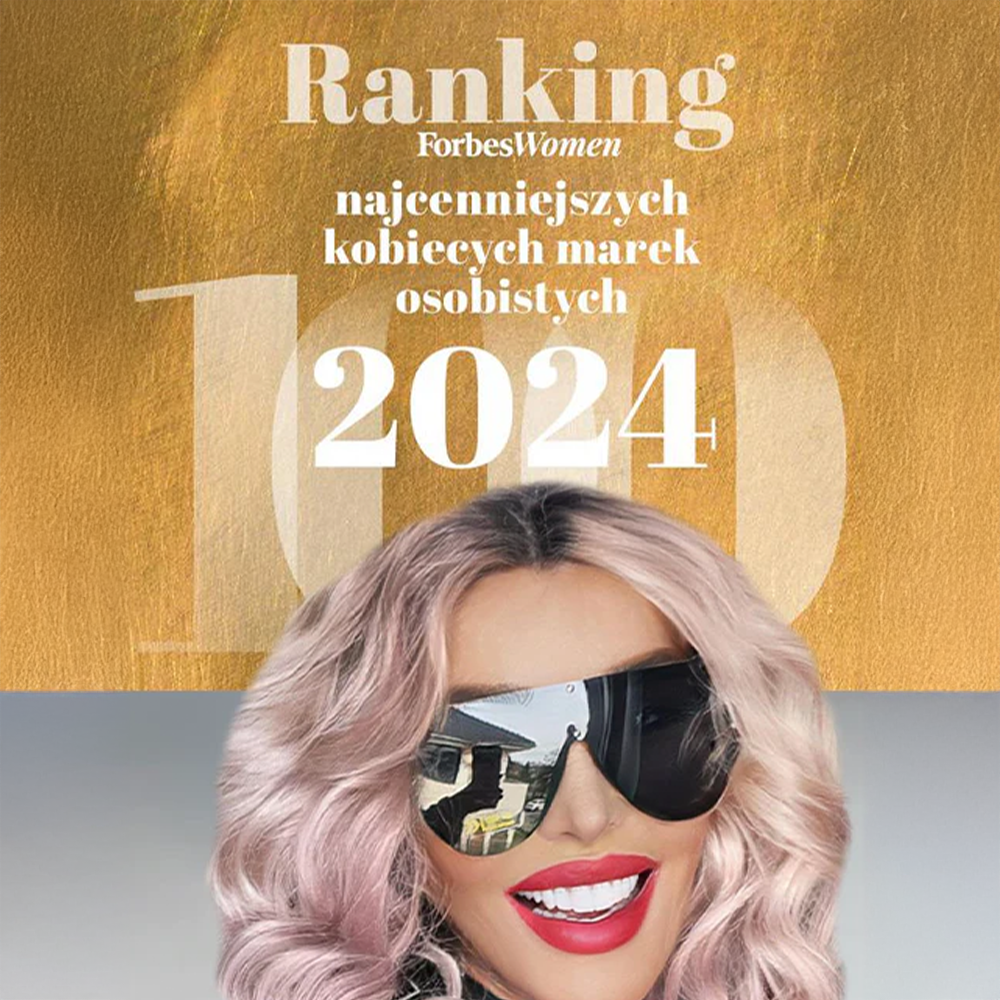
Eva Minge comes from an artistic family; art has been present in her life since birth. For decades, the artist has painted with her imagination not only on the world's catwalks but also on canvas. In recent years, her paintings and sculptures have been exhibited at the most prestigious exhibitions worldwide, and the investment value of her work has doubled in a short time. Ewa Minge has returned to Paris, this time presenting art at its highest level.
Jarosław Kukowski on Ewa Minge's paintings:

Ewa Minge's paintings are impossible to ignore. Their expressive power compels us to pause. Besides magic, expression, and power, her works also contain much symbolism. Their mystery enchants, yet also perplexes. The origins of their creation, what the artist means, why he dresses the figures in this particular form. Let's pause at the first painting and try to dispel the spell. Perhaps against the artist's will, but it's hard, I can't help myself. There's a story, and it's worth telling. Taken from a bedroom wall, it's personal. At first glance, it's clear that the painting depicts Christ crucified. Not painted literally, not in the usual muted colors, not as an icon in the European sense. The artist drew inspiration from Latin American poetics, from folklore, which dazzles with color, from the simplified form of painted pictograms, to a different worldview combining Christianity with magic. Just as Dwurnik drew from Nikifor, Picasso from African sculpture, and Wyspiański from Japanese engravings, Minge explores artistic territories still new to Europeans. He imbues the viewer with the magic of color, but also with symbolism. And here we come closer to our own cultural sphere. The painting is dominated by two colors, as directed by Saint Faustina – light blue and red. The former symbolizes the water that justifies the soul, while red is the blood that is the soul's life. These two rays are said to have flowed from Jesus's side, pierced on the cross. It's also worth noting the way Christ's body is painted. It's not a literal representation. It's not a beautiful Adonis on a wooden cross. It's a figure deformed by pain, like in a 16th-century painting by Matthias Grünewald, about which art historians still write. How many beautiful, stylized, and beautifully adorned works have passed unnoticed, yet this remains in memory, stripped of its literalness and fleeting beauty. Pain and sacrifice became the subject. It is more than fashion, aesthetic exploration, or technical tricks. Truth is beauty in a timeless sense. Ewa's paintings are its physical emanation, remaining on canvas as its reflection. A reflection of Mystery.
~Jarosław Kukowski


Delicacy.
Ewa Minge's paintings are both a surprise for the contemporary viewer and a journey through time, as well as poetry enclosed in the weave of the canvas.
The decorativeness and ethereal nature of the female figures, with which the artist seems to be fascinated, and the fleeting atmosphere make the recipient of her art remain in a state of constant insatiability.
As an involuntary observer of the play of light and the colors surrounded by a golden glow, the viewer is immersed in a world full of melancholy.
He's looking for the punch line, the completion of a hand movement initiated by a dancer in a dress, the texture of which is revealed by densely applied gold paint. Meanwhile, the Moon, planets, and other celestial bodies rotate and move in an eternal cycle amidst a palette of colors inspired by the climate of the South: saturated red, gold, and blue.
Initially, we notice a subtle manifestation of femininity in Ewa Minge's works, and then delving into the diverse texture of the paintings, we find in the tangle of lines and brushstrokes, inspiration from the art of old symbolists: the Parisian precursor of surrealism: Odilon Redon, who drew with pastels a mysterious Druid woman, wrapped in golden robes, and William Blake, an English mystic, searching for the Sacred by escaping into painting and literature.
The artist places her works between the metaphor of humanity and that of Creation, evocatively extracting the human figure from the depths of a dark background and giving it a new shape. She employs vibrant, saturated colors to intrigue and captivate the viewer, arousing their curiosity. She draws ancient symbols from the shadows and imbues them with new meanings, creating a modern, expressive depiction of the human body.
The woman at the center of Minge's work, like Urizen the Creator in Blake's famous etching, creates a new myth of the creation of the world: sublime and full of delicacy. Here, every gesture carries a promise, every wave of the hand imparts new meaning.
Walking the subtle line between symbolism and surrealism, Ewa Minge creates dreamlike images, stories of human fate, rich in metaphors. She assures us that every human struggle with matter, fate, and even weaknesses, gives birth to beauty.
~Joanna Kalinowska art historian